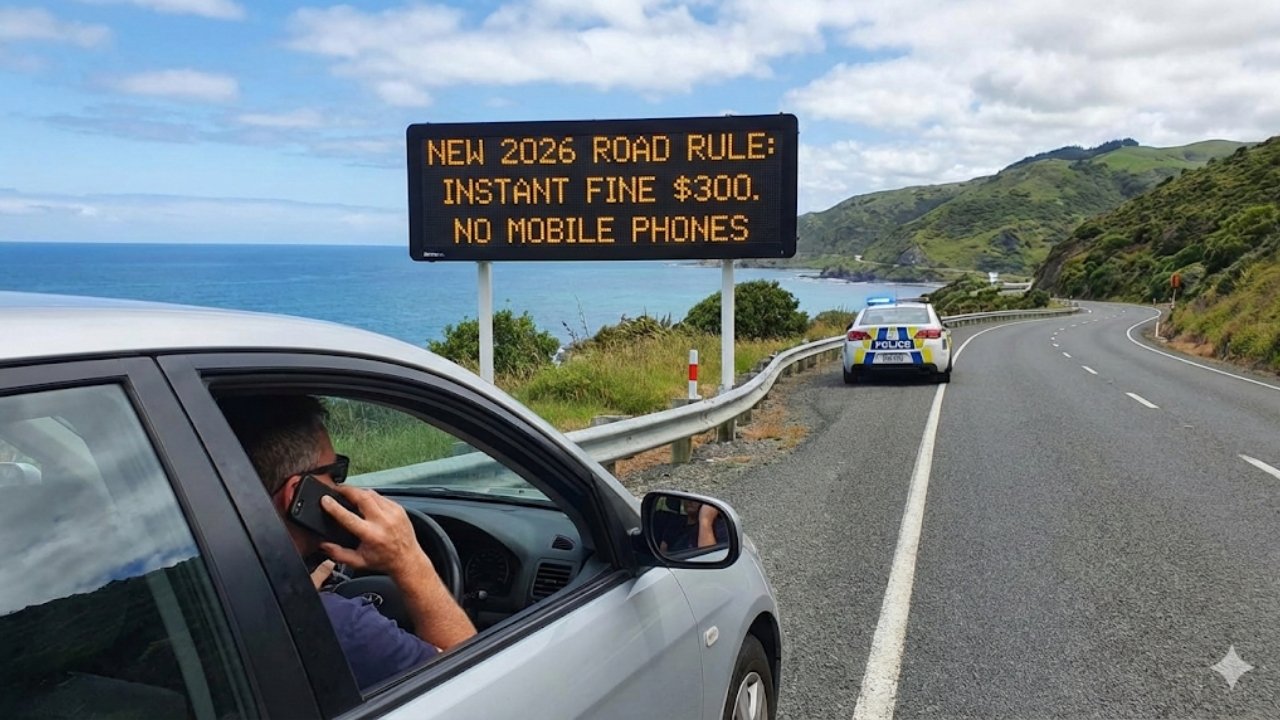
New Zealand’s roads are getting stricter in 2026 with a fresh rule targeting a widespread driver habit. Authorities aim to boost safety by cracking down on speeding between 31 and 35 km/h over the limit, slapping drivers with an instant $300 fine. This change reflects ongoing efforts to cut accidents caused by excessive speed.
The Speeding Crackdown Explained
Kiwi drivers often push limits on open highways, thinking a few extra kilometers won’t hurt. But from early 2026, police will enforce fines more rigorously using advanced cameras and patrols. The $300 penalty hits specifically for speeds 31-35 km/h above posted limits, a bracket many ignore during routine drives.
This isn’t entirely new—fines have existed—but instant processing via mobile units makes it feel sudden. Past leniency on minor excesses is fading as data shows even small overruns contribute to crashes. Transport officials stress education alongside enforcement to shift behaviors.
Why $300 for This Range?
Fines scale with severity to deter risky driving. At 10 km/h over, it’s just $30, but it jumps sharply past 30 km/h. The $300 mark signals a threshold where danger spikes, prompting immediate financial sting without court delays.
Data from recent years links this speed band to higher collision rates, especially in urban zones. Lawmakers chose $300 as a balance—tough enough to notice, yet below court-level penalties for worse offenses. Drivers get demerit points too, risking license points.
Speeding Fine Breakdown
Here’s a clear table of New Zealand’s 2026 speeding fines, straight from police guidelines:
| Over Limit (km/h) | Fine Amount |
|---|---|
| 10 or less | $30 |
| 11-15 | $80 |
| 16-20 | $120 |
| 21-25 | $170 |
| 26-30 | $230 |
| 31-35 | $300 |
| 36-40 | $400 |
| 41-45 | $510 |
| 46-50 | $630 |
Common Mistakes Leading to Fines
Many fines stem from misjudging limits on familiar roads or forgetting school zones drop to 40 km/h. Rural drivers assume leniency on state highways, but cameras don’t care. Tiredness after long hauls amplifies errors, turning 110 km/h into 145 km/h without notice.
Tech like cruise control helps, yet tailgating or overtaking clouds judgment. Women and men alike fall into this; stats show all ages affected, though young drivers top the list. Awareness campaigns highlight these pitfalls before fines do.
Enforcement in Action
Mobile speed vans and fixed cameras will ramp up in 2026, processing violations on-site. No more warnings for repeat zones—pay up via app or face extras. Police prioritize high-risk areas like Auckland motorways and South Island tourist routes.
Integration with license systems means points accumulate fast. Repeat offenders hit suspension quicker, freeing resources for education. Communities welcome safer stats, though some grumble about “revenue raising.”
Impact on Daily Drivers
For commuters, this means budgeting for potential slips—$300 equals a week’s groceries. Families rethink road trips, opting for rest stops. Insurers may hike premiums based on demerits, rippling to household costs.
Positive shifts emerge too: fewer tailgaters, smoother traffic. Long-term, accident drops save lives and taxpayer dollars on emergency responses. Adapt by checking apps for limits and vehicle calibration.
How to Avoid the Fine
Stick to limits using GPS alerts and speed signers. Regular servicing ensures accurate speedos. In doubt, slow down—better safe than sorry.
Tips for Compliance
-
Double-check zone signs entering towns.
-
Use adaptive cruise on highways.
-
Teach passengers to remind you politely.
This rule pushes mindful driving for all.
FAQs
What triggers the instant $300 fine?
Speeds 31-35 km/h over the limit, caught by cameras or officers.
Can I contest the fine?
Yes, within 28 days via NZ Police portal, but evidence must prove error.
Does it apply to all vehicles?
Mostly cars and bikes; trucks have separate scales.