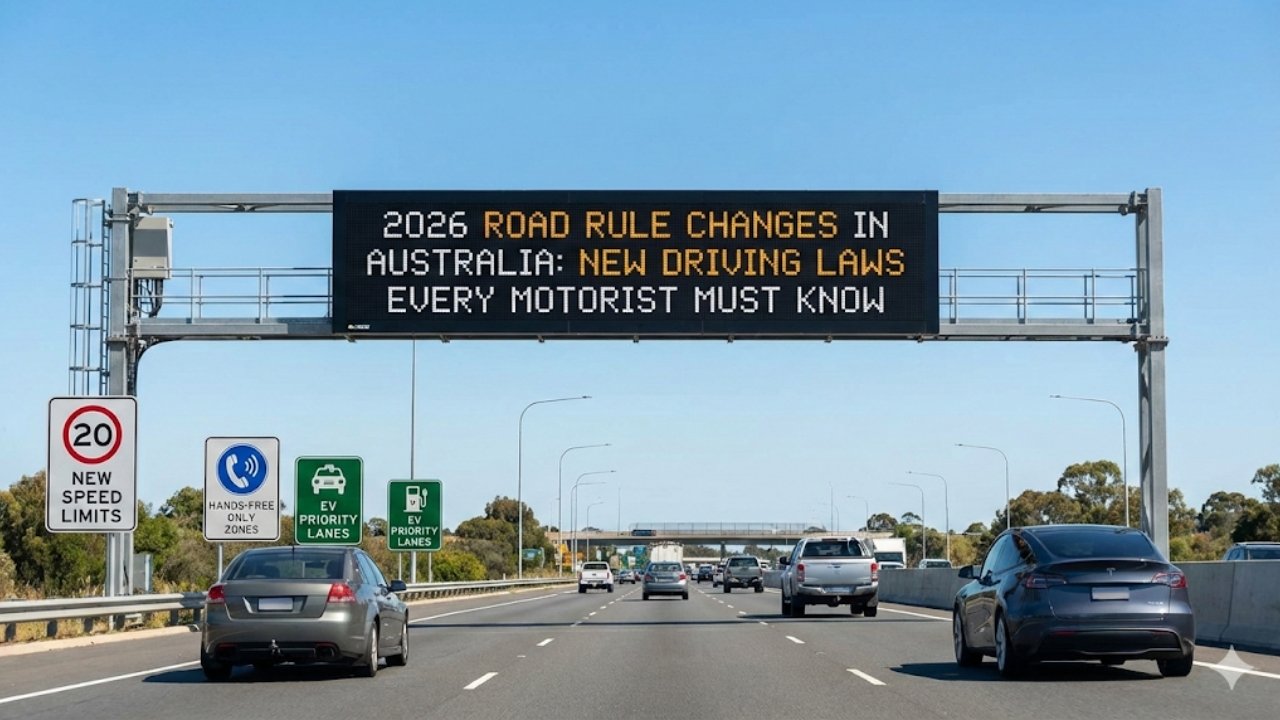
Australia’s roads are getting safer with bold updates rolling out in 2026. These changes target common crash causes like speeding and distractions, pushing the “Towards Zero” safety vision forward.
Expanded Slow Down and Move Over Rule
Drivers now face stricter duties when passing roadside workers. The “slow down and move over” law, once limited to emergency vehicles, covers any stationary vehicle with flashing lights, like tow trucks or maintenance crews. Motorists must drop to 40 km/h—or 25 km/h in South Australia—when overtaking, creating vital space for those on verges.
This shift responds to rising worker incidents nationwide. In busy states like Victoria and Queensland, police ramp up patrols to enforce it from early 2026. Forget the old habits; ignoring this could mean hefty fines and points that hit your license hard.
AI Cameras Target Seatbelt and Phone Use
Smart cameras are revolutionizing enforcement across Australia. In the ACT, AI systems already scan for improper seatbelts, spotting shoulder straps under arms or loose lap belts with pinpoint accuracy. By mid-2026, similar tech rolls out nationally, catching offenders without human eyes.
Mobile phone rules tighten too—no more touching your device at all, even at lights. Victoria leads with average $423 fines plus three demerit points for seatbelt slips alone. These automated checks promise fairer policing but demand constant vigilance from every driver.
School Zone and Urban Speed Reductions
Kids come first with new 40 km/h zones sprouting near schools on main roads. South Australia mandates these during peak hours on arterials, while Queensland expands 30-40 km/h limits in urban spots like Cairns CBD and Hervey Bay. Crash stats from trial areas show dramatic drops, justifying the nationwide push.
Rural roads aren’t spared either. Unmarked regional stretches now default to lower limits, with unsealed tracks capped explicitly to curb high-speed fatalities. Expect signage updates and more fixed cameras by year’s end, especially outside cities where distances tempt speeding.
Key Penalties at a Glance
Busy drivers need quick facts on fines and points. Here’s a breakdown of major 2026 offences:
| Offence | Fine (AUD) | Demerit Points | Notes |
|---|---|---|---|
| School Zone Speeding | $1,100+ | 5-7 | 30 km/h urban limits common |
| Seatbelt Violation | $423+ | 3 | AI camera detection |
| Phone Use While Driving | $600+ | 4 | Zero-tolerance, no exceptions |
| Move Over Breach | $800+ | 3-5 | Covers roadside workers |
Senior Driver and License Reforms
Over-75s face non-automatic renewals everywhere by early 2026. Western Australia and Northern Territory finalize health-based assessments, requiring medical checks and practical tests for fitness. It’s about capability, not age, but expect longer queues at licensing centers.
Overseas license swaps get tougher too—mandatory theory and practical exams for all newcomers. These rules aim to keep unfit drivers off roads, blending compassion with public safety amid an aging population boom.
Rural and Remote Road Updates
Outback travel changes with default speed drops on rural unmarked roads. New standards demand slower paces on gravel stretches, part of the National Road Safety Action Plan. Governments cite data showing speed as the top killer in remote crashes, so signage and education campaigns launch now.
Communities in Queensland and beyond see tailored 40 km/h zones in high-risk spots. Drivers heading off-grid should double-check apps like the myPolice site for live updates—ignorance won’t excuse fines here.
Fine Payment and Enforcement Shifts
Victoria’s fine reforms alter payment timelines and default penalties from January 2026. Miss deadlines, and automatic license suspensions kick in quicker, with installment options vanishing for repeat offenders. This pressures compliance while easing burdens for one-offs.
Nationally, AI integration means fewer warnings—cameras issue tickets instantly. Stay legal by using state transport apps for rule refreshers and dash cams for disputes.
Preparing for the New Normal
Brush up via free online road rule quizzes from state authorities. Adjust habits like hands-free only for calls and scanning for flashing lights early. These laws save lives, but adaptation takes effort—motorists who prioritize them avoid thousands in costs.
FAQs
When do school zone changes start?
Most roll out by end-2026, with South Australia leading on arterials.
Do seniors need tests now?
Yes, over-75 renewals require health and driving assessments nationwide.
What if I get an AI camera fine?
Review evidence online; appeals focus on errors, but compliance is simplest.