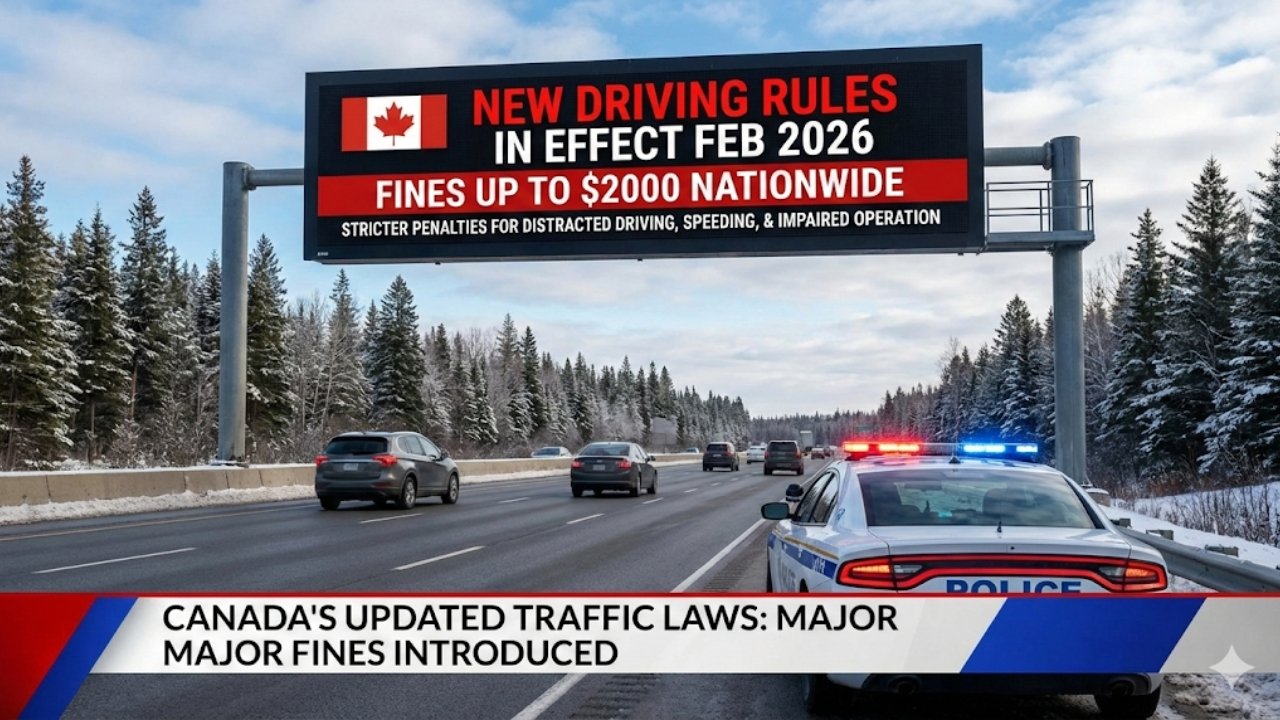
Canada’s driving landscape shifted dramatically in February 2026 with nationwide updates to traffic rules, emphasizing stricter enforcement and steeper penalties up to $2,000 for serious violations. These changes, coordinated by Transport Canada and provincial authorities, target distracted driving, speeding, and impaired operation to cut accident rates. Drivers must adapt quickly to avoid heavy financial hits and license risks.
Key Changes Overview
The updates expand definitions of risky behaviors, like broader distracted driving that now includes smartwatches and in-car screens. Zero-tolerance policies hit harder on phone use, even at stops, with immediate roadside checks empowered by AI cameras and digital tools. Repeat offenders face vehicle impoundment alongside fines, pushing for lasting compliance nationwide.
Why the Tougher Stance
Rising collisions from urban congestion and tech distractions prompted these reforms, as data showed preventable crashes climbing yearly. Provinces like Ontario and British Columbia led harmonized efforts, blending education campaigns with automated enforcement for consistent application. Officials aim to foster a culture of caution, reducing fatalities through deterrence rather than just reaction.
Fine Breakdown Table
| Violation | Previous Fine | New Fine (2026) | Extra Penalties |
|---|---|---|---|
| Speeding | $500 | $1,000 | Demerit points, suspension |
| Texting/Distracted | $150 | $500 | License review |
| Impaired Driving | $1,000 | $2,000 | Impoundment, interlock |
| Improper Lane Change | $200 | $500 | Points accumulation |
| School Zone Speeding | $250 | $1,200 | Court mandatory |
Impact on Everyday Drivers
Commuters in cities like Toronto or Vancouver will feel this most, as fines double for common slips like glancing at notifications. Insurance firms warn of premium hikes for violators, compounding costs beyond the ticket. New drivers under graduated systems get extra scrutiny, with quicker escalations to full suspensions.
Enforcement Innovations
Smart cameras and AI now scan for excessive speeds over 40 km/h, triggering instant stops without officer presence. Provinces share violation data for seamless tracking across borders, ending loopholes for interprovincial travel. Seniors over 62 face renewal vision tests, tying into broader safety nets.
Steps for Compliance
Review your province’s site for local tweaks, install dash cams voluntarily, and practice hands-free habits. Apps from safety groups simulate tests on new rules, helping build muscle memory. Staying proactive cuts risks, turning potential pitfalls into routine safe drives.
Road Safety Gains Expected
Early reports from pilot zones show 15% drops in violations, hinting at broader wins by mid-2026. These laws prioritize lives over leniency, urging all to drive defensively amid tech-heavy roads. Canada’s push sets a model for balanced mobility and protection.
FAQs
Q1: When do fines up to $2,000 apply?
Mainly for impaired or severe speeding cases.
Q2: Are rules uniform nationwide?
Coordinated federally, with minor provincial variations.
Q3: What about seniors?
Mandatory vision/medical checks on renewal from age 62.