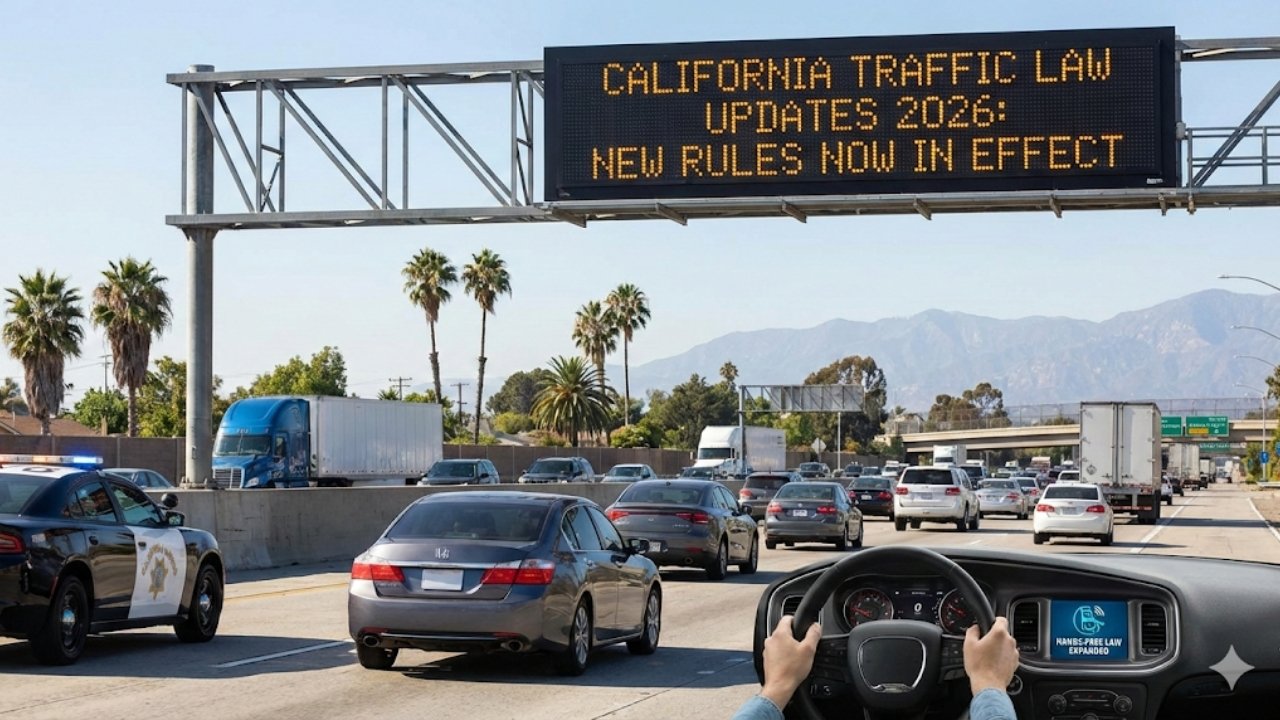
California’s traffic laws have seen significant updates in 2026, focusing on enhancing road safety, curbing drunk driving, and adapting to emerging technologies. These changes, effective from January 1, aim to reduce accidents and protect vulnerable road users through stricter enforcement and innovative measures.
Expanded Move-Over Rules
Drivers now face broader obligations under the “slow down and move over” law, courtesy of AB 390. Previously limited to emergency vehicles, the rule extends to any stationary vehicle showing hazard lights, cones, flares, or warning devices, such as tow trucks or maintenance crews. This expansion targets roadside worker safety, with violations drawing fines up to $50 plus potential points on your license that hike insurance rates.
Tougher DUI Penalties
AB 366 mandates ignition interlock devices for all DUI offenders, including first-timers, through 2033. These breathalyzer-equipped systems prevent engine starts if alcohol is detected, building on prior laws to slash repeat offenses. Probation periods for intoxicated vehicular manslaughter have lengthened, emphasizing accountability amid rising impaired driving concerns.
| New Law Aspect | Key Change | Penalty/Fine |
|---|---|---|
| Slow Down/Move Over (AB 390) | Applies to all hazard-lit vehicles | Up to $50 fine + points |
| Ignition Interlock (AB 366) | Required for all DUIs until 2033 | License suspension if bypassed |
| License Plate Obstruction (AB 1085) | Bans tints/blockers | $1,000 per violation |
| Key-Programming Devices (AB 486) | Possession for burglary intent | Up to 6 months jail + $1,000 |
License Plate and Theft Prevention
AB 1085 cracks down on license plate covers, tints, or devices obscuring readability for cameras or officers, slapping a $1,000 fine per infraction. Meanwhile, AB 486 turns possession of key-programming tools or signal jammers—used for car thefts—into a misdemeanor with jail time and fines. These rules combat rising vehicle thefts and automated enforcement evasion.
Autonomous Vehicle Regulations
SB 480 permits special marker lamps on self-driving cars to signal when automated systems engage, alerting nearby drivers and pedestrians. Starting July 1, fully driverless vehicles need two-way communication for first responders, per AB 1777, while heavy-duty autonomous trucks gain DMV permit access with strict reporting. Police can now issue violation notices directly to manufacturers.
Automated Enforcement Growth
Cities like Malibu join Los Angeles and others in expanding speed cameras, red-light cameras, and bus lane monitors. These systems mail tickets based on photo evidence, prioritizing high-accident zones without officer presence. Expect more automated ticketing to deter speeding and signal-running statewide.
School Zone Safety Push
Though the statewide drop from 25 to 20 mph in school zones hits in 2031 via AB 382, local areas can adopt it now, with heightened fines for speeding where kids are present. Enforcement ramps up near schools, crosswalks, and playgrounds to shield children. Drivers should watch for flashing beacons signaling active zones.
Abandoned Vehicles and E-Bikes
AB 630 lets counties like Los Angeles scrap low-value abandoned RVs faster, easing blight. E-bikes and off-highway electric motorcycles fall under new OHV rules, requiring ID plates. These tweaks keep roads clear and regulate growing electric mobility.
FAQs
Q: Does the move-over law apply to tow trucks?
A: Yes, any vehicle with hazard lights now qualifies.
Q: Who needs an ignition interlock in 2026?
A: All DUI offenders, even first-timers.
Q: What’s new for self-driving cars?
A: Special lamps and responder communication devices.