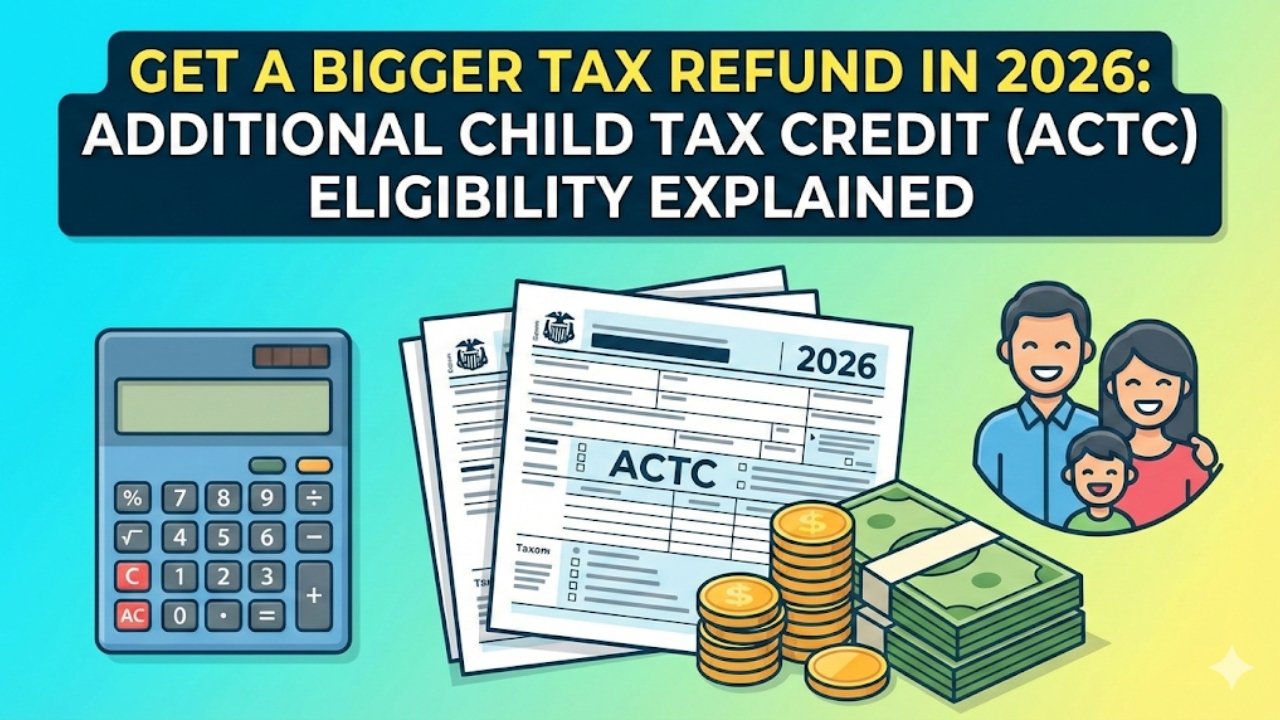
Many families look forward to tax season as a chance to ease financial pressures, and the Additional Child Tax Credit stands out as a powerful tool for boosting refunds. For 2026 filings, this refundable portion of the Child Tax Credit can deliver up to $1,700 per qualifying child, helping low- and moderate-income households pocket real cash even if they owe little in taxes. Understanding eligibility unlocks this benefit fully.
Core Child Tax Credit Basics
The Child Tax Credit forms the foundation, offering $2,200 per eligible child under age 17 at year-end. This non-refundable part first offsets your tax liability, with any excess flowing into the ACTC for a refund. Recent expansions under tax reforms have indexed amounts for inflation, making 2026 slightly more generous than prior years.
Families must navigate eight IRS tests: the child needs a close relationship like son, daughter, or grandchild; they must live with you over half the year; and you provide more than half their support. Citizenship matters too—U.S. citizens, nationals, or residents with valid Social Security numbers qualify, and now both parents need SSNs as well.
ACTC Refund Rules
What sets ACTC apart is its refundable nature, turning unused credit into direct payments. You need at least $2,500 in earned income, like wages or self-employment profits, to trigger it—no investment income alone counts. The refund caps at $1,700 per child, calculated as 15% of earnings above that $2,500 threshold.
Exclusions apply if you claim foreign earned income credits, pushing many to weigh trade-offs carefully. Filing status plays in: single parents phase out above $200,000 adjusted gross income, while joint filers hold steady until $400,000.
2026 Key Thresholds Table
| Category | 2026 Amount/Threshold |
|---|---|
| Total Child Tax Credit | $2,200 per child |
| ACTC Refundable Maximum | $1,700 per child |
| Minimum Earned Income | $2,500 |
| Phaseout Start (Single) | $200,000 AGI |
| Phaseout Start (Joint) | $400,000 AGI |
Maximizing Your Refund
To grab the biggest ACTC payout, track all earned income meticulously—side gigs and freelance work add up fast. Use IRS Schedule 8812 to compute it step-by-step, attaching it to your Form 1040. Early preparation pays off: gather SSNs, residency proofs, and income docs by January.
Common pitfalls include overlooking half-year residency or support tests, which disqualify otherwise perfect claims. Free tax help through VITA programs or IRS Free File suits many, especially in places like Chandigarh for expat filers.
Recent Changes Boosting Access
Updates for 2026 stem from the “One Big Beautiful Bill,” raising credit levels and tightening SSN rules to curb fraud. Inflation adjustments ensure the $2,200 base and $1,700 refund hold purchasing power amid rising costs. These shifts favor working families, with refund averages climbing near $1,500 for eligible multi-child homes.
Documentation Essentials
Keep birth certificates, school records, and income statements handy to back claims during audits. E-filing with direct deposit speeds refunds to 21 days, versus six weeks for paper. Double-check dependent details to avoid delays.
Claiming Tips for Families
Joint filers often see fuller credits due to higher phaseouts, so marriage status influences strategy. Self-employed parents calculate net earnings carefully, deducting business expenses first. Consulting a tax pro early prevents errors, potentially adding hundreds to your refund.
Pursuing ACTC eligibility methodically can transform tax time from a chore into a financial win. With clear records and awareness of 2026 rules, families secure well-deserved boosts just as living expenses peak.
FAQs
Q: Can I claim ACTC without owing taxes?
A: Yes, if earned income tops $2,500, you get up to $1,700 refunded per child.
Q: Does my child need an SSN for ACTC?
A: Absolutely—both child and filer (or spouse) require valid SSNs.
Q: When do phaseouts reduce my credit?
A: Starting at $200,000 AGI single/$400,000 joint, dropping $50 per $1,000 over.