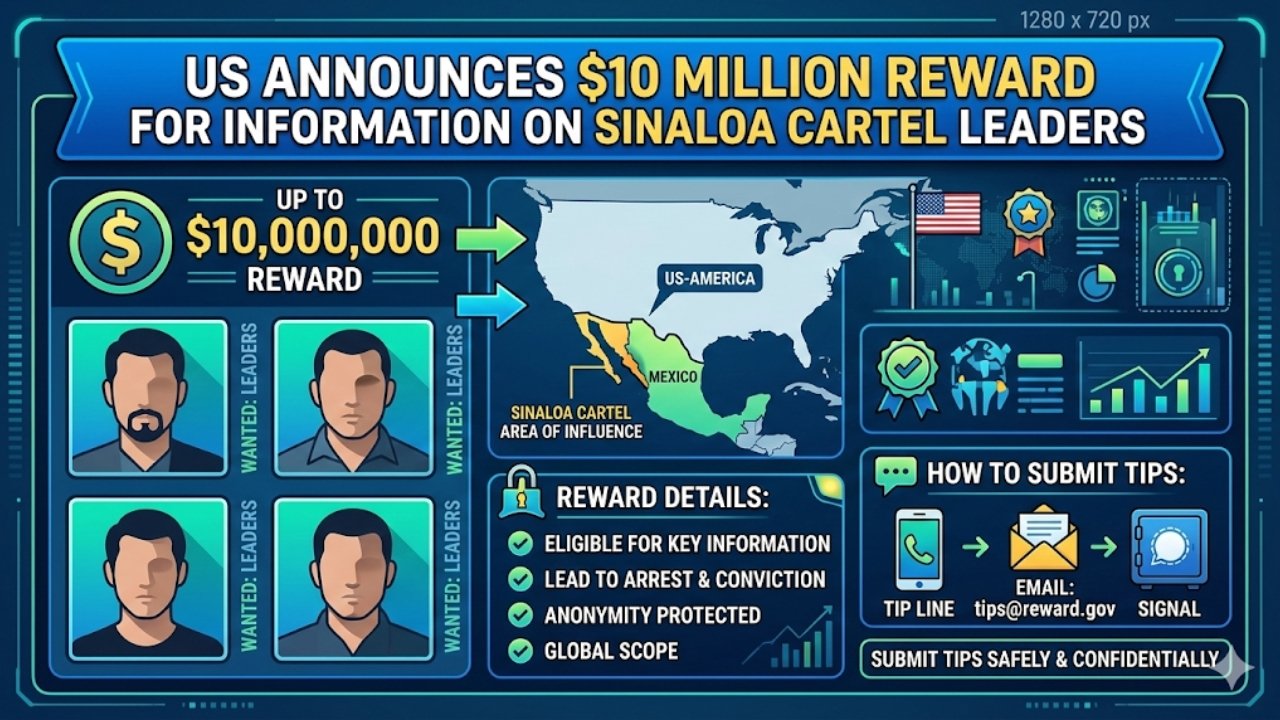
The United States has launched a bold initiative by announcing a $10 million reward for tips leading to the arrest or conviction of two notorious Sinaloa Cartel leaders. This move targets brothers René Arzate-García, alias “La Rana” or “The Frog,” and Alfonso Arzate-García, known as “Aquiles” or “Achilles.” Coming amid heightened U.S.-Mexico tensions over drug trafficking, the offer underscores a renewed push to dismantle cartel operations along the border.
Strategic Border Control
These brothers reportedly command the “Tijuana Plaza,” a vital trafficking hub in Baja California that gives the Sinaloa Cartel dominance over the world’s busiest U.S.-Mexico border crossing. Their role ensures a steady flow of drugs into California while fending off rivals like the Jalisco New Generation Cartel. U.S. officials describe them as essential to the cartel’s command structure, making their capture a game-changer for regional security.
New Charges Surface
The reward coincides with a superseding indictment against René, aged 42, expanding from initial San Diego drug charges to include conspiracy, narcoterrorism, and support for a foreign terrorist group. Known for extreme violence, he oversees kidnappings and executions to enforce cartel discipline. Alfonso, 52, shares equal culpability in these border operations, though his exact location remains elusive.
Reward Breakdown
| Leader Name | Alias | Reward Amount | Key Allegations |
|---|---|---|---|
| René Arzate-García | La Rana (The Frog) | $5 million | Drug trafficking, narcoterrorism, violence |
| Alfonso Arzate-García | Aquiles (Achilles) | $5 million | Cartel leadership, border control |
Cartel Power Dynamics
The Sinaloa Cartel, once led by Joaquín “El Chapo” Guzmán, has splintered but retains massive influence through figures like the Arzate-García brothers. Tijuana’s strategic position amplifies their impact, turning routine crossings into pipelines for fentanyl, cocaine, and meth that fuel America’s opioid crisis. This $10 million bounty reflects the U.S. State Department’s Narcotics Rewards Program, which has previously toppled kingpins.
Timing and Context
Announced on February 26, 2026, the reward follows the Mexican army’s killing of Jalisco’s “El Mencho,” whose $15 million U.S. bounty symbolized cartel might. With President Trump pushing aggressive anti-cartel policies post-reelection, this action signals deeper bilateral cooperation. Yet, Mexico’s sovereignty concerns could complicate tipster pursuits across the border.
Implications for U.S.-Mexico Ties
Such rewards often yield results by incentivizing insiders, but they strain relations when operations spill into Mexico. Baja California’s cartel wars have escalated violence, with Tijuana caught in turf battles that claim hundreds of lives yearly. Dismantling the Arzate-García network could weaken Sinaloa’s grip, potentially shifting power vacuums and sparking more bloodshed.
Broader Fight Against Cartels
This bounty fits into a long-term U.S. strategy blending financial incentives, indictments, and military aid to Mexico. Past successes, like El Chapo’s 2016 capture, show rewards work when locals turn informant despite risks. As fentanyl deaths climb in the U.S., targeting mid-level bosses like these brothers aims to choke supply lines before they reach streets nationwide.
Potential Outcomes
Success here might deter other lieutenants, fracturing Sinaloa’s hierarchy further. However, cartels adapt quickly, often promoting ruthless successors. The U.S. hopes this high-stakes gamble disrupts Tijuana’s plaza indefinitely, saving lives on both sides of the border while pressuring Mexico for joint ops.
FAQs
Who are the targeted cartel leaders?
Brothers René “La Rana” Arzate-García and Alfonso “Aquiles” Arzate-García, Sinaloa bosses in Tijuana.
What crimes face René Arzate-García?
Conspiracy, narcoterrorism, drug trafficking, and violent enforcement.
Why $10 million total?
$5 million each for arrests or convictions via the State Department’s rewards program.