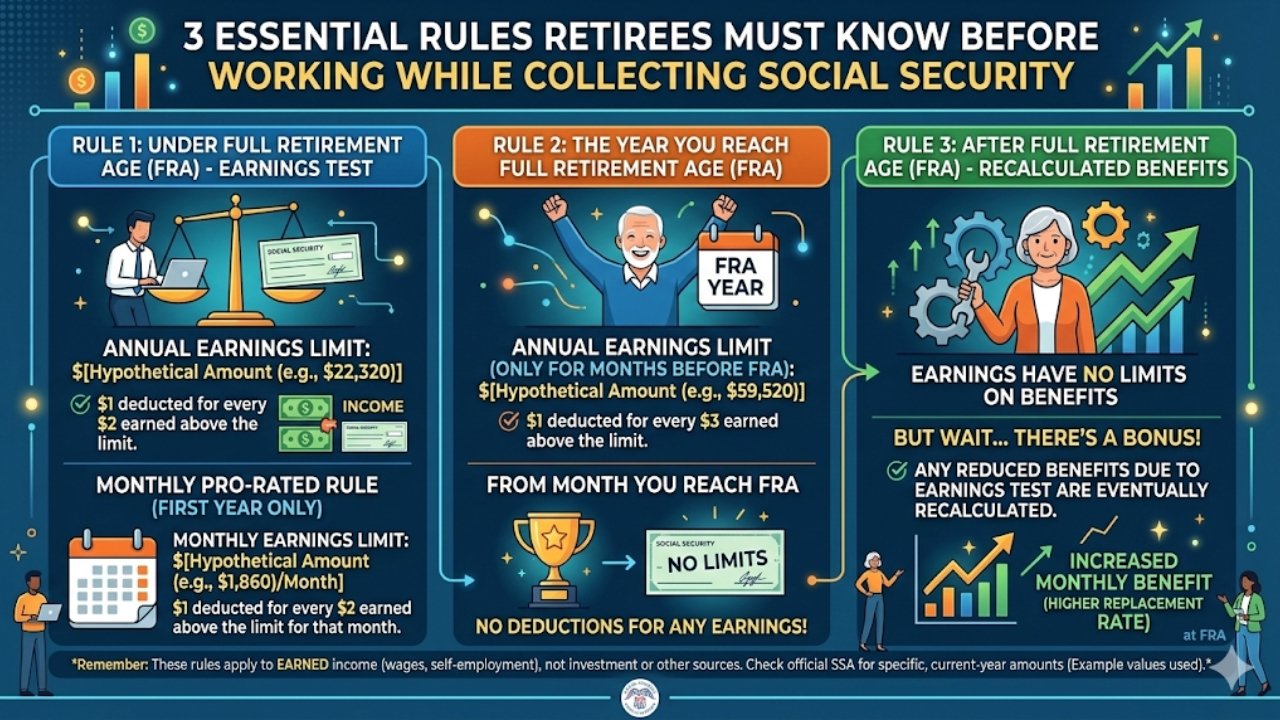
Retirees often dream of supplementing their Social Security checks with part-time work, but timing and income levels matter greatly. The first essential rule revolves around the Social Security earnings test, which applies if you claim benefits before reaching full retirement age, typically 66 to 67 depending on your birth year. Exceeding annual earnings limits triggers a temporary reduction in benefits—$1 withheld for every $2 earned over the threshold. This encourages delaying work or benefits until the rules ease up, preserving more of your hard-earned retirement income.
Full Retirement Age Freedom
Once you hit full retirement age, the second key rule kicks in: no earnings limit exists. You can hustle full-time, launch a side gig, or consult without any benefit cuts. This shift rewards patience, as Social Security recalculates and credits back any previously withheld amounts through higher future payments. Many retirees leverage this by ramping up work just as restrictions lift, blending income streams seamlessly for financial flexibility.
Tax Implications of Combined Income
The third critical rule involves taxes, where working while collecting benefits can push up to 85% of your Social Security payments into taxable territory. The IRS uses a “combined income” formula—adjusted gross income plus nontaxable interest plus half your benefits—to determine this. High earners face provisional income thresholds, making tax planning vital; strategies like Roth conversions or charitable donations help mitigate surprises come filing season.
Benefit Calculation Nuances
Working post-retirement doesn’t just risk reductions—it can boost your benefits long-term. Social Security bases payments on your 35 highest-earning years, so a strong post-retirement year replaces a weaker one from earlier. This automatic adjustment happens annually without paperwork, potentially increasing monthly checks. Retirees should track their earnings history via a mySocialSecurity account to gauge if part-time roles will lift their average indexed monthly earnings.
| Earnings Scenario | Age Group | 2026 Limit | Reduction Rate | Outcome |
|---|---|---|---|---|
| Under Limit | Pre-FRA | $24,000 | None | Full benefits |
| Over by $5,000 | Pre-FRA | $24,000 | $1 per $2 | $2,500 withheld |
| Any Amount | At/Over FRA | Unlimited | None | No cuts, possible recalc |
| Self-Employed | Pre-FRA | Varies | Substantial services test | Monthly review |
Reporting and Compliance Steps
Staying compliant means prompt reporting of earnings to the Social Security Administration, especially if self-employed or with variable income. Underreporting risks overpayments you must repay, while overreporting could shortchange you unnecessarily. Tools like the SSA’s earnings test calculator help forecast impacts, and quarterly check-ins keep things accurate. Retirees working abroad face extra scrutiny, as foreign earnings often count fully toward limits.
Medicare Premium Adjustments
Beyond Social Security, working affects Medicare premiums through the income-related monthly adjustment amount, or IRMAA. Higher modified adjusted gross income from two years prior hikes Part B and D costs—up to $500+ monthly for top brackets. Retirees must appeal IRMAA if life changes like reduced hours drop income, using Form SSA-44 for relief. Coordinating work with healthcare planning avoids these stealthy expenses.
Planning for Maximum Security
Smart retirees model scenarios: delay benefits to age 70 for 8% annual delayed credits, then work freely after FRA. Health, job market, and spousal benefits factor in—survivor rules preserve higher earner advantages. Consulting a financial advisor tailors this to personal cash flow, ensuring work enhances rather than erodes retirement security. With lifespans lengthening, these rules empower informed choices for decades of stability.
FAQs
Can withheld benefits get refunded?
Yes, reductions before FRA are credited back at FRA via higher payments.
Does spousal work affect my benefits?
No, only your own earnings count toward the test.
Are gig economy jobs included?
Yes, all wages and net self-employment earnings apply.