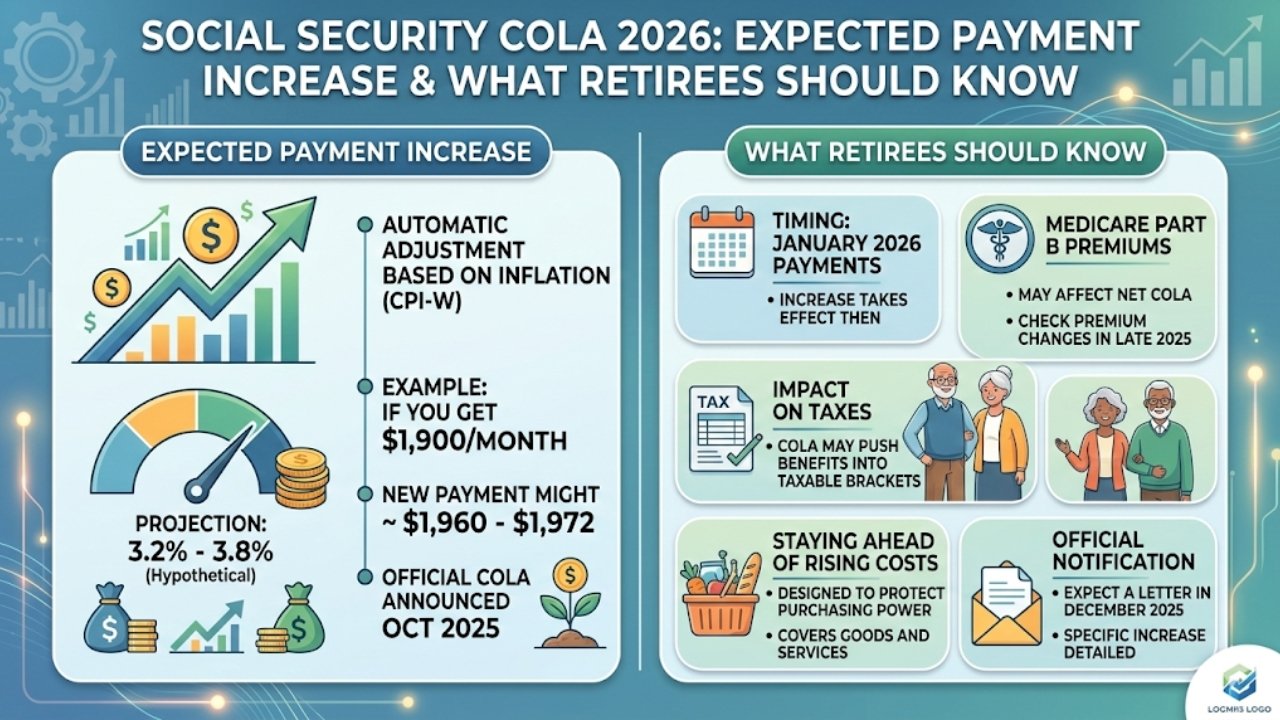
Social Security recipients in the United States are set to see a modest but meaningful increase in their monthly checks starting in January 2026. The 2026 cost‑of‑living adjustment (COLA) is locked at 2.8%, applying to both Social Security retirement, disability, and Supplemental Security Income (SSI) benefits. This adjustment is designed to help retirees keep pace with inflation and maintain some of their purchasing power as everyday expenses continue to rise.
What the 2026 COLA Means
The 2..8% COLA will raise monthly payments for roughly 75 million Americans who receive Social Security or SSI benefits. For the average Social Security retiree, this translates to an extra roughly 56 dollars per month, or about 670 dollars per year, once the increased payments begin in January 2026. The adjustment is calculated using the Consumer Price Index for Urban Wage Earners and Clerical Workers (CPI‑W), which tracks inflation pressures on typical household budgets.
Who Gets the Increase
The 2026 COLA applies automatically to nearly 71 million Social Security beneficiaries, including retired workers, spouses, survivors, and disabled individuals who receive Social Security Disability Insurance (SSDI). About 7.5 million SSI recipients will also see their payments go up, with the higher SSI amounts starting on December 31, 2025. People who receive both Social Security and SSI will see increases under both programs, though the exact additional amount depends on their individual benefit levels.
How the Increase Affects Monthly Checks
Because COLA is a percentage hike, the dollar‑amount gain differs from person to person based on current benefit size. For example, someone collecting 1,500 dollars per month before 2026 would see their check rise by about 42 dollars, while a person receiving 2,000 dollars would gain roughly 56 dollars. Even though the increase is smaller than some peak‑inflation years, it still helps offset rising costs for essentials like groceries, utilities, and medications. Retirees should review their Social Security benefit statements or log into their my Social Security account to see their updated 2026 payment estimate.
Social Security 2026: Key Numbers at a Glance
The table below summarizes core figures related to the 2026 Social Security COLA and its impact on typical beneficiaries. The values are approximate and based on current SSA guidance and widely cited estimates.
| Item | Detail |
|---|---|
| 2026 COLA percentage | 2.8% increase in Social Security and SSI benefits |
| Average added per month (retiree) | About 56 dollars more per month |
| Total beneficiaries affected | Roughly 75 million Americans on Social Security or SSI |
| Typical 2,000‑dollar monthly check after COLA | About 2,056 dollars per month |
| When COLA starts | Social Security payments from January 2026; SSI from December 31, 2025 |
What Retirees Should Keep in Mind
Even with the 2.8% boost, many seniors may still feel that their COLA does not fully cover the inflation they actually experience, especially in areas such as healthcare and long‑term care. Financial planners often advise retirees to treat COLA as a partial buffer, not a full solution, and to continue reviewing their budgets, savings withdrawals, and work‑related earnings if they are still employed. Those who take Social Security early and continue to work may also face revised earnings limits and taxation rules in 2026, so it pays to understand how these changes interact with their check.
Managing Finances Around the Raise
The extra money from the 2026 COLA can be especially helpful if retirees direct it toward fixed‑cost categories such as higher premiums, rising rents or property taxes, or medical bills. Some older adults choose to earmark the increase for an emergency fund or to pay down higher‑interest debt, which can improve long‑term financial stability. Reviewing Medicare premiums, prescription‑drug costs, and local assistance programs can also stretch the COLA further, helping retirees maintain their standard of living without pulling heavily from savings.
Planning Beyond 2026
While the 2026 COLA offers short‑term relief, retirees should think ahead to future years when inflation and benefit levels may change again. Keeping an up‑to‑date record of Social Security statements, spousal benefits, and potential delayed‑retirement credits can help people make smarter claiming‑age decisions later on. Staying informed about legislative proposals around Social Security financing can also help retirees anticipate possible adjustments to benefits beyond automatic COLA increases.
FAQs
Q1: How much will Social Security checks go up in 2026?
Social Security benefits are rising by 2.8% in 2026, which works out to roughly an extra 56 dollars per month for the average retiree.
Q2: Does the 2026 COLA apply to everyone on Social Security?
Yes, nearly all Social Security beneficiaries and SSI recipients will receive the 2.8% increase automatically, starting with payments in January 2026 for Social Security and December 31, 2025 for SSI.
Q3: Will the 2026 COLA keep up with inflation for retirees?
Many seniors feel that the 2.8% increase does not fully match the inflation they personally experience, particularly in healthcare and housing, so it is wise to treat it as partial protection rather than a complete offset.