Rumors of fresh stimulus payments hitting bank accounts in February 2026 have flooded social media feeds, leaving many Americans wondering if relief is finally on the way. These claims often mix real tax processes with unverified promises tied to President Trump’s tariff policies. This fact check separates hype from reality, drawing on official IRS guidance and recent economic developments.
No New Federal Stimulus Checks
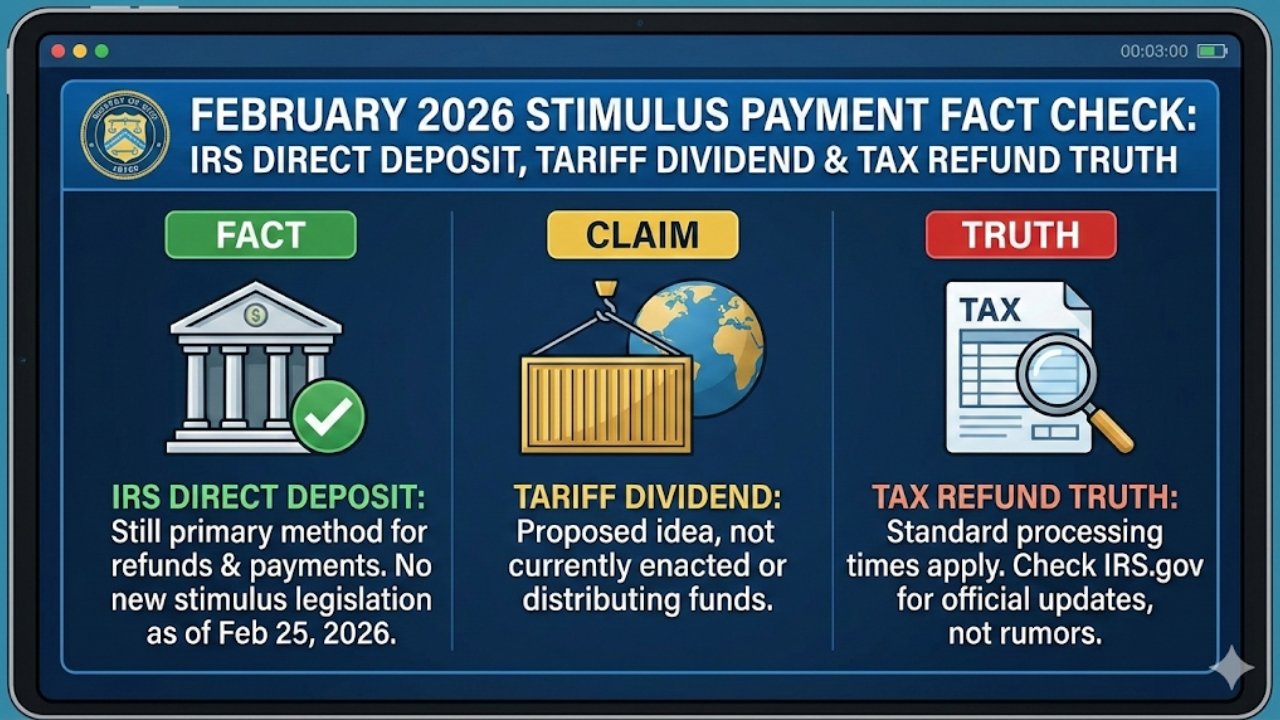
The federal government wrapped up its last major round of economic impact payments back in 2021, when millions received up to $1,400 per person under the American Rescue Plan. Any talk of a broad February 2026 stimulus package lacks backing from Congress or the IRS—no new legislation has passed to authorize widespread direct deposits for everyday taxpayers. Social media posts claiming “$2,000 checks for all” stem from misunderstandings of older programs, like the Recovery Rebate Credit adjustments made in late 2024 and early 2025. That initiative, which sent automatic payments to those who missed 2021 credits, fully ended by April 2025 with no extensions.
Tariff Dividend Explained
President Trump has repeatedly touted tariffs on imports as a revenue windfall, suggesting during a December 2025 cabinet meeting that “trillions” collected could fund dividend-style refunds to Americans. While his administration highlights aggressive trade policies generating billions—particularly from China and Mexico—no specific “tariff dividend” program exists for civilians. Critics, including Democrats on the Joint Economic Committee, point out that these tariffs have raised household costs by nearly $1,200 on average since Trump’s 2025 inauguration. Instead, tariff funds support targeted initiatives, like a $2.9 billion military housing boost in the “One Big Beautiful Bill,” benefiting 1.28 million active-duty troops via nontaxable allowances.
IRS Direct Deposits Demystified
Direct deposit remains the fastest way to receive IRS money, typically processing tax refunds within 21 days of e-filing. Claims of automatic February 2026 stimulus deposits ignore how the IRS operates—payments only flow after verified filings or legislated programs. Recent IRS news releases, such as IR-2026-21 from February 3, urge taxpayers to use online accounts for tracking, but they confirm no surprise stimulus waves. If you’re seeing deposits, they’re far more likely tied to routine refunds than a new relief effort.
Tax Refunds Drive February Payments
Most bank hits in February come from 2025 tax refunds, not stimulus. The IRS processes these based on withholdings, credits like the Earned Income Tax Credit (EITC), and Child Tax Credit eligibility. Last year’s average refund clocked in at $3,167, with experts projecting around $4,167 for 2026 due to tax law tweaks favoring families and lower earners. Electronic filers with direct deposit see funds quickest—often by mid-February—while paper returns lag. To claim anything, file your return; the three-year window applies.
Here’s a quick breakdown of expected 2026 refund realities:
| Category | Average Amount | Processing Time (Direct Deposit) | Key Eligibility Notes |
|---|---|---|---|
| Standard Refund | $3,167 | 21 days | Overwithholding from paychecks |
| With EITC | $2,500+ | Up to 6 weeks early filers | Low-to-moderate income workers |
| Child Tax Credit | Up to $2,000/child | 21 days | Families with dependents |
| Projected 2026 Avg | $4,167 | Varies by filing date | Boost from recent law changes |
Social Media Misinformation Surge
Viral posts amplify confusion by splicing tariff talk with stimulus nostalgia, often using fake IRS screenshots. Fact-checkers note a spike in these claims around tax season, preying on hopes for quick cash amid rising costs. The Pentagon’s troop payments get misconstrued as public dividends, but they’re strictly military-focused. Always verify via IRS.gov or your online account—third-party sites peddling “eligibility checkers” often lead to scams.
What Taxpayers Should Do Now
File early for 2025 taxes to maximize February cash flow, opting for direct deposit to skip mail delays. Use the IRS “Where’s My Refund?” tool after 24 hours of e-filing. Monitor for phishing emails claiming stimulus—official notices come via mail or your IRS account. If eligible for missed credits, review past returns, but 2021 deadlines have passed.
Preparing for Real Relief
While no blanket stimulus looms, tariff revenues could influence future tax cuts if Congress acts. Trump’s predictions of a record 2026 refund season hinge on policy wins, but households feel the pinch from import taxes now. Stay informed through official channels to avoid false hope—financial planning beats waiting for windfalls.
FAQs
Is a $2,000 February 2026 stimulus check real?
No, that’s a rumor mixing refunds and old credits—no new federal program exists.
What’s the tariff dividend Trump mentioned?
It’s not public payments; funds support military housing, not civilian checks.
When will my tax refund arrive?
Direct deposit: 21 days post-e-file; check IRS.gov for status.