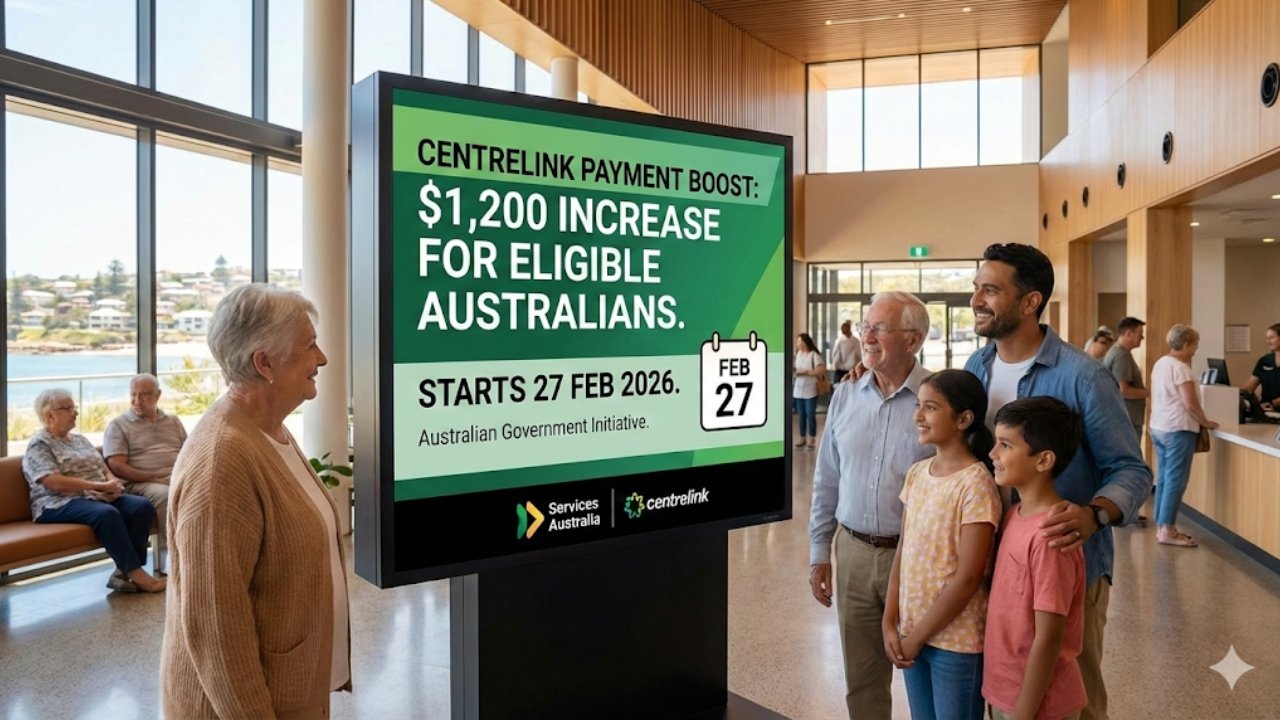
Millions of Australians relying on Centrelink for daily needs will soon feel real relief as payment rates rise significantly starting 27 February 2026. This adjustment, driven by cost-of-living pressures, promises up to a $1,200 annual boost for many recipients through higher fortnightly amounts. Unlike past modest tweaks, this indexation cycle delivers lasting support baked into base payments.
Why the Boost Matters Now
Rising grocery bills, rent hikes, and energy costs have stretched household budgets thin across Australia. The 2026 Centrelink increase directly tackles these challenges by lifting maximum rates for key programs like JobSeeker, Age Pension, and Disability Support Pension. Families and individuals can expect this extra cash to ease immediate strains, with the full $1,200 benefit accumulating steadily over the year rather than as a one-off lump sum.
Key Payments Getting the Lift
JobSeeker recipients stand to gain the most, with single adults seeing fortnightly payments climb by around $45 to $50, totaling roughly $1,200 yearly. Age Pension and Disability Support Pension follow suit, while supplements like energy assistance also adjust upward. Carer Allowance jumps to about $162.60 per fortnight, helping those providing essential family support. These changes reflect government efforts to keep pace with inflation in a tough economic climate.
Payment Breakdown Table
| Payment Type | Fortnightly Increase | Annual Boost (approx.) |
|---|---|---|
| JobSeeker (single) | $45–$50 | $1,170–$1,300 |
| Age Pension (single) | $40–$45 | $1,040–$1,170 |
| Disability Support | $42–$48 | $1,092–$1,248 |
| Carer Allowance | $8–$10 | $208–$260 |
Automatic Updates for Recipients
The beauty of this boost lies in its simplicity—no forms to fill or claims to submit. Centrelink systems update rates automatically from 27 February, with higher deposits hitting bank accounts on the next payday cycle. Recipients can verify changes instantly via MyGov linked to Centrelink, where payment summaries refresh to show the new figures. Keeping personal details current remains crucial to avoid glitches or overpayment issues.
Beyond Base Rates: Extra Adjustments
Indexation doesn’t stop at core payments; income and asset thresholds rise too, letting more people qualify or receive fuller amounts. Rent Assistance and pharmaceutical allowances get proportional bumps, amplifying the overall impact. For couples or dependents, combined household gains could push totals well past $1,200 annually, offering breathing room for bigger expenses like medical bills or school supplies.
Long-Term Economic Ripple
This $1,200 infusion spreads widely, injecting billions into local economies as recipients spend on essentials. Small businesses from supermarkets to repair shops benefit from the flow-on demand. Policymakers highlight how sustained indexation builds financial stability, reducing reliance on crisis aid down the line. Yet experts urge watching future budgets, as global uncertainties could influence next rounds.
Steps to Maximize Your Boost
Check your MyGov account weekly around late February to confirm the uplift lands smoothly. Update any income shifts promptly to lock in eligibility. Community services offer free advice sessions for complex cases, ensuring no one misses out. This proactive approach turns the $1,200 promise into tangible security for Australian families navigating 2026’s uncertainties.
FAQs
When does the $1,200 boost start?
From 27 February 2026, via higher fortnightly payments.
Do I need to apply?
No, updates happen automatically in Centrelink systems.
Which payments qualify?
JobSeeker, Age Pension, Disability Support, and Carer Allowance mainly.