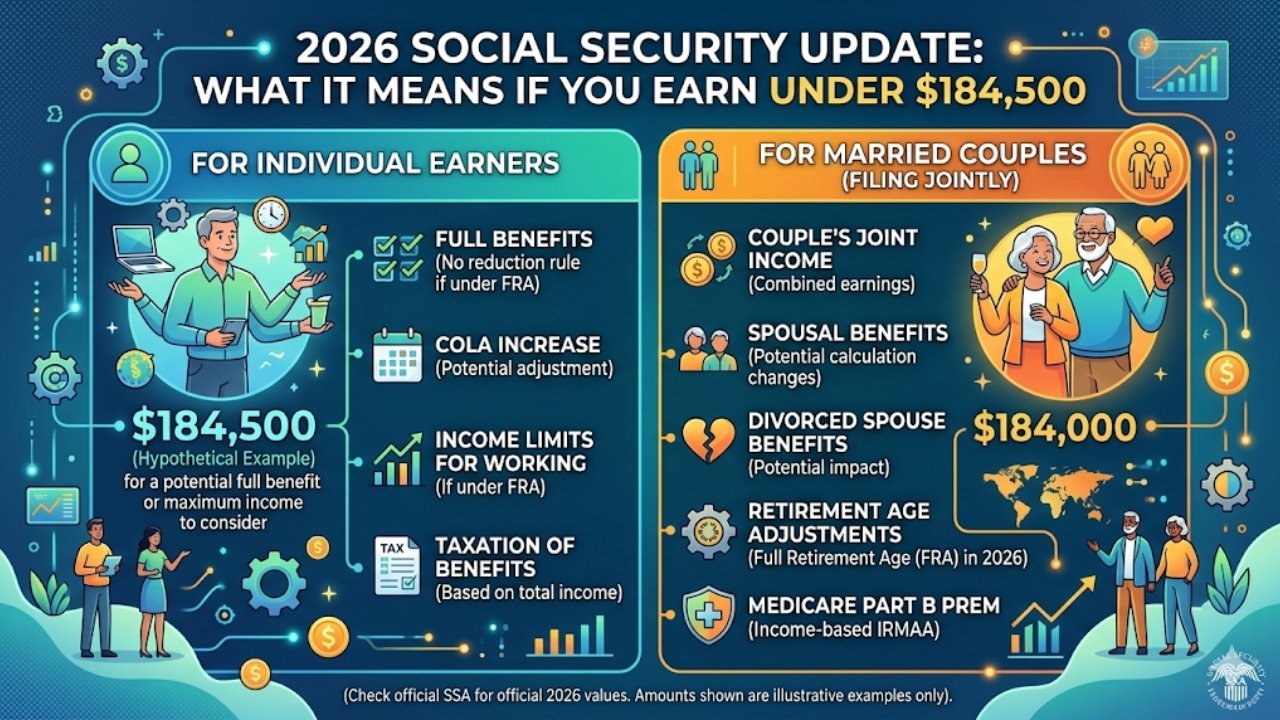
The 2026 Social Security landscape brings a key adjustment that touches everyday workers. For those earning under $184,500, this shift in the wage base limit reshapes how payroll taxes fund your future benefits. Understanding it helps you plan smarter for retirement without surprises.
Wage Base Limit Rises
Every year, the Social Security Administration tweaks the maximum earnings subject to the 6.2% OASDI tax workers pay. In 2025, that cap sat at $176,100, meaning anyone below it paid tax on their full salary, matched by employers. Now in 2026, it climbs to $184,500, expanding the taxable income pool by $8,400 for those crossing the old threshold. This automatic inflation adjustment keeps the system solvent as wages grow nationwide.
If your paycheck stays under the new limit, your tax bite doesn’t increase directly. Instead, the higher cap pulls the goalpost farther for maxing out credits toward benefits. Workers hovering near $176,100 see peers above it contribute more, widening the gap to top-tier payouts.
Everyday Impacts on Workers
Most Americans earn well below $184,500, with median household income around $80,000. For them, this update means steady 6.2% deductions on every dollar earned, no extra burden. Self-employed folks still cover the full 12.4%, but the cap gives breathing room before taxes stop. The real sting hits higher earners between the old and new limits, who now fund an additional $521 in taxes each (6.2% of $8,400). Lower earners dodge that, focusing instead on steady contributions building their monthly checks.
This change underscores a broader push for fairness in funding Social Security amid aging populations. It ensures more revenue flows in without hiking rates, preserving the 2034 trust fund horizon. If you’re under the cap, your focus shifts to boosting earnings strategically for bigger future rewards.
Key Figures at a Glance
Here’s a quick comparison of recent wage base limits and their tax implications:
| Year | Wage Base Limit | Max Employee Tax (6.2%) | Increase from Prior Year |
|---|---|---|---|
| 2024 | $168,600 | $10,453 | $6,300 |
| 2025 | $176,100 | $10,918 | $8,400 |
| 2026 | $184,500 | $11,439 | $8,400 |
Boosting Your Benefits Path
Earning under $184,500 positions you safely below the cap, but it also signals room to grow. The maximum Social Security benefit at full retirement age hits $5,251 monthly in 2026, dwarfing the average $2,071 check. To narrow that gap, aim to earn closer to the limit over 35 peak years, as benefits formula weights your top earners heaviest. Side hustles or raises can add credits without tax hikes until you hit the cap.
Employers feel this too, matching your 6.2% up to $184,500, raising payroll costs for high earners. Small businesses might adjust budgets, but for most under the limit, it’s business as usual. Savvy workers use this knowledge to negotiate salaries or max 401(k)s alongside Social Security.
Planning Ahead Strategically
This update arrives alongside a 2.5% COLA for 2026 benefits, lifting average checks modestly. Earnings limits for early claimants also rise—to $24,480 if under full retirement age all year, with $1 deducted per $2 over. These layers mean under-$184,500 earners can work more without full benefit cuts. Long-term, it pressures Congress to address shortfalls, but for now, it stabilizes contributions.
Review your paystubs and projections annually. Tools like the SSA’s Quick Calculator help forecast benefits based on current earnings. If under the cap, prioritize income growth; it amplifies retirement security without immediate tax pain.
Broader Economic Ties
Inflation drives these annual bumps, reflecting 2025’s wage trends. With President Trump’s reelection influencing fiscal policies, expect scrutiny on Social Security reforms. For now, the $184,500 cap ensures robust funding, benefiting lower earners by sustaining the program they rely on most.
FAQs
Does this raise my taxes if I earn under $176,100?
No, your tax rate stays 6.2% on all income below the cap.
How does it affect my future benefits?
Higher earnings up to the cap build bigger credits for larger monthly payouts.
When do taxes stop on earnings?
At $184,500 and above; only up to that amount counts.